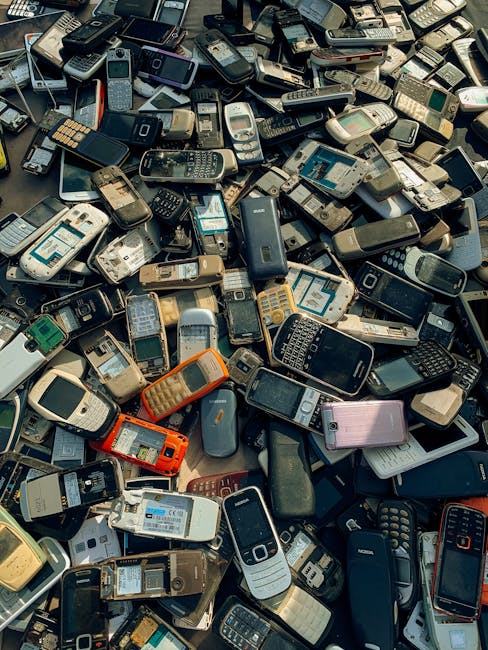
Barking Station: Best Local Options for Electronics Disposal
If you have a broken TV, an old printer, a box of tangled chargers, or office kit that has finally reached the end of its life, Barking Station can be a surprisingly practical place to start. The challenge is not just getting rid of electronics. It is choosing the right route: one that is safe, legal, convenient, and kind to the environment.
This guide explains the best local options for electronics disposal near Barking Station, how each option works, what to watch out for, and how to make a sensible decision without overthinking it. You will also find a straightforward checklist, a comparison table, and a realistic example of how a local clearance can be handled from start to finish.
For readers looking beyond a single item, it is also useful to understand how electronics disposal fits into wider clearance work such as local waste removal services, office clearance, or even a broader home clearance if you are clearing multiple rooms at once.
One small reality check: electronics are not just "waste". They often contain metals, plastics, wiring, batteries, memory storage, and sometimes hazardous components. That is why the best disposal route is not always the nearest bin or the quickest van. The right choice depends on what you have, how much of it there is, and whether the items are reusable, repairable, or simply at end of life.
Quick takeaway: if the item still works, reuse or donation may be best. If it does not, use a proper recycling or clearance route that handles electrical and electronic equipment responsibly.
Table of Contents
- Why Barking Station electronics disposal matters
- How local electronics disposal works
- Key benefits and practical advantages
- Who this is for and when it makes sense
- Step-by-step guidance
- Expert tips for better results
- Common mistakes to avoid
- Tools, resources and recommendations
- Law, compliance, standards, and best practice
- Options, methods, and comparison table
- Case study or real-world example
- Practical checklist
- Conclusion
- Frequently asked questions
Why Barking Station: best local options for electronics disposal Matters
Barking Station sits in a busy, mixed-use part of East London where people move home, upgrade devices frequently, and replace office equipment on a regular cycle. That means the need for electronics disposal is constant. A kettle that no longer heats properly, a desktop monitor with a cracked screen, an old router, a printer that eats paper, or a laptop with a dead battery all need a sensible end-of-life route.
Why does this matter so much? Because electronics left in general waste can create avoidable environmental harm, safety issues, and clutter. Some items contain lithium batteries, circuit boards, or components that should not be crushed, burned, or tossed into mixed rubbish. Others may still contain data that should be removed before disposal. Truth be told, a lot of disposal headaches come from people leaving this decision too late.
There is also a practical side. If you live in a flat near the station, run a small office, or are clearing an entire property, the easiest route is not always the cheapest on paper. The best local option is usually the one that matches the item type, collection urgency, and access conditions without causing extra trips, lift problems, or wasted time.
In areas like Barking, where many homes and businesses operate on tight schedules, convenience matters. Local collection options can reduce the burden of carrying heavy kit, navigating transport, or waiting weeks for a one-off slot. If your disposal plan also includes other bulky items, it may make sense to combine electronics with a wider service such as flat clearance or house clearance.
How Barking Station: best local options for electronics disposal Works
Most electronics disposal routes fall into one of four practical categories: reuse, take-back, recycling drop-off, or collection by a clearance provider. Each one serves a different need.
1. Reuse or donation
If the item still works, it may be suitable for reuse. A functional monitor, printer, or kitchen device can sometimes be passed on, sold, or donated. This is often the most resource-efficient outcome because it keeps the item in circulation for longer. Just make sure the equipment is genuinely usable and not simply "almost working".
2. Retailer or manufacturer take-back
Some electronics retailers and manufacturers offer take-back schemes, particularly for smaller items or when you are buying a replacement. These systems are useful for straightforward items, but they may not always handle large quantities, awkward equipment, or mixed household and office waste.
3. Local recycling drop-off
Recycling centres and authorised collection points are suitable for end-of-life electronics that are no longer needed. This route works best when you can transport the items safely and when you are disposing of a manageable quantity. It is a common choice for residents clearing a few appliances or a small batch of cables, chargers, and accessories.
4. Professional clearance or waste removal
For larger quantities, heavier items, or mixed loads, a local clearance service is often the simplest route. This is especially helpful if you are dealing with office electronics, old white goods with electrical components, or a complete room clearance. A reputable provider can remove items from the property, sort them appropriately, and route them for reuse or recycling where possible. If you need a broader commercial solution, look at business waste removal or office clearance.
In practice, the process usually looks like this: identify the item, check whether it still works, remove sensitive data if needed, decide on the best route, and then book or carry out the disposal. Simple enough in theory. In reality, the tricky part is matching the right method to the right item.
Key Benefits and Practical Advantages
Choosing the right local electronics disposal option near Barking Station gives you more than just a tidier room. It can save time, lower risk, and reduce the chances of disposal mistakes that are annoying to fix later.
- Convenience: local collection or nearby drop-off avoids long travel with heavy or awkward kit.
- Safer handling: trained teams understand how to move fragile screens, batteries, and mixed equipment without damage.
- Better sorting: electronics can be separated for reuse, dismantling, or recycling rather than mixed into general waste.
- Data awareness: if you are disposing of computers, tablets, or phones, a proper process helps you think about wiping storage first.
- Less clutter: old cables and unused devices have a habit of multiplying in cupboards, lofts, garages, and back offices.
- Suitable for larger jobs: one collection can often handle a mixed load, which is useful if electronics are part of a wider clear-out.
There is also an organisational benefit. When electronics are dealt with properly, the rest of the clearance becomes easier. Items can be grouped by type, rooms can be emptied faster, and you are less likely to end up with a pile of "I'll deal with that later" gadgets. We have all seen that pile.
If your project includes furniture or appliance replacement alongside electronics disposal, it can be helpful to align the whole job with furniture disposal or furniture clearance so the move-out is handled in one go rather than in stages.
Who This Is For and When It Makes Sense
This topic is relevant to a wide range of people, and the right disposal route changes depending on the situation.
Homeowners and tenants
If you are replacing a television, clearing a spare room, or removing old computers before a move, local electronics disposal can keep the process manageable. It is especially useful if stairs, parking, or limited storage make moving items yourself awkward.
Landlords and letting agents
After a tenancy ends, you may inherit damaged small appliances, broken accessories, or outdated tech left behind. A prompt disposal plan helps you clear the property faster and prepare it for re-letting.
Small businesses and offices
Old monitors, printers, phones, routers, and desktop equipment are common in office clear-outs. Many businesses prefer a professional collection because it reduces disruption and lets them handle mixed office waste in one structured visit. If that is your situation, business waste removal is worth considering.
People clearing storage spaces
Lofts, garages, cupboards, and under-stairs storage often contain outdated electronics that have quietly accumulated over years. In those cases, a broader clearance service such as loft clearance or garage clearance can be more efficient than trying to sort items piecemeal.
Anyone dealing with mixed waste
If electronics are only one part of the job, such as a home refresh, renovation, or business relocation, a general waste removal service may be the most flexible option.
Step-by-Step Guidance
Here is a practical way to approach electronics disposal near Barking Station without making it more complicated than it needs to be.
- List the items. Write down exactly what you have: screens, laptops, phones, printers, kettles, chargers, cables, speakers, consoles, or mixed IT equipment.
- Separate reusable items. If something still works, consider donation, resale, or reuse before disposal.
- Check for batteries and data. Remove batteries where appropriate and make sure any storage devices are wiped or physically secured before handover.
- Group by size and type. Small items can often be bundled together, while large screens or office equipment may need separate handling.
- Choose the most suitable route. Decide between drop-off, take-back, or collection based on quantity, access, and urgency.
- Ask about handling and recycling. If you are using a clearance provider, confirm how they separate electronics and what happens to reusable components.
- Book collection or plan transport. Make sure you have lift access, parking space, and a clear path if the items are being removed from a flat or office.
- Keep a record if needed. Businesses often like a simple note of what was removed and when, especially for internal records.
A practical tip: if you are clearing a property and the electronics are spread across several rooms, do not start by moving everything at once. Walk the space first, gather all electrical items into one area, and then sort. It saves time and reduces the chance of missing a charger drawer, a hidden modem, or that one mystery cable you have not identified since 2018.
Expert Tips for Better Results
The best electronics disposal outcomes usually come from a few simple habits rather than any dramatic trick.
- Prioritise reuse before recycling. If an item still has useful life left, that is often the best environmental outcome.
- Be careful with screens. TVs, monitors, and laptops can crack easily, so keep them upright and protected during handling.
- Keep cables together. Loose cables become a mess very quickly. Bundle them before transport or collection.
- Check accessories too. Mice, docking stations, adapters, batteries, remote controls, and power bricks are often part of the same disposal job.
- Separate confidential devices. Laptops, phones, and storage drives deserve extra attention before leaving the property.
- Ask about mixed loads. If you have electronics plus furniture or household waste, a provider that can take a mixed job may be more efficient.
Another useful approach is to think in terms of "what saves the most time for the least effort?". Often the answer is not to do everything yourself. A locally arranged collection can be especially sensible when the items are bulky, the building has stairs, or the disposal deadline is close.
For businesses or larger properties, it is worth reading about recycling and sustainability so you can choose a route that supports responsible handling rather than just speed.
Common Mistakes to Avoid
Electronics disposal goes wrong in predictable ways. The good news is that most of them are easy to avoid.
Putting electronics in general waste
This is the most common mistake and the easiest to fix. Standard rubbish is not the right place for many electrical items, especially anything with batteries, circuit boards, or plug-in components.
Forgetting data risk
People often focus on the physical item and forget about the information stored on it. If the device could contain personal, business, or financial data, treat that as part of the disposal plan.
Mixing useful items with broken ones
One working monitor and one shattered one should not be treated exactly the same way. Keeping them separate may open up reuse or donation options.
Assuming every collection is the same
Some services are excellent for bulky mixed waste but not ideal for sensitive IT equipment. Others are perfect for small electronics but less practical for an entire office. Match the service to the load.
Underestimating access issues
Flat entrances, parking restrictions, stairs, and lift size can affect collection time and ease. A little planning here prevents a lot of awkward carrying later.
Leaving disposal until after a move-out
If you are moving home or closing a business site, it is much easier to deal with electronics before the final day. Once the schedule gets tight, even simple jobs become stressful.
Tools, Resources and Recommendations
You do not need a complicated toolkit to dispose of electronics well, but a few practical items make the job smoother.
- Sticky labels or marker pens: helpful for identifying items that should be kept, donated, or recycled.
- Cable ties or reusable bands: useful for bundling wires and accessories.
- Basic packing materials: blankets, bubble wrap, or cardboard can protect screens and fragile items.
- Small boxes or tubs: ideal for remotes, chargers, batteries, and adapters.
- Data wipe checklist: handy for laptops, phones, tablets, and storage devices before removal.
When choosing a local service, look for clear communication, sensible access planning, and a realistic approach to sorting items. A provider that explains what can be taken, how it will be handled, and whether the visit can include other household or office items is usually easier to work with.
If you are comparing providers, the following pages may help you understand related service categories and what might fit your situation: about the company, pricing and quotes, contact the team, and insurance and safety. Those pages are especially useful if your disposal job involves heavy items, building access, or multiple rooms.
Law, Compliance, Standards, and Best Practice
Electronics disposal in the UK is shaped by common-sense environmental practice and the general expectation that electrical items should be handled responsibly. You do not need to be a compliance specialist to make a good decision, but it does help to know the basics.
For households, the key idea is simple: do not dispose of electrical items as ordinary rubbish if a proper reuse or recycling route is available. For businesses, the standard of care is higher because you may also need to think about record-keeping, data security, and internal asset control.
Best practice usually includes:
- checking whether the item can be reused or repaired first;
- removing batteries where appropriate and safe to do so;
- protecting personal or business data before disposal;
- using recognised recycling or clearance routes rather than informal dumping;
- keeping clear notes for larger office or commercial removals.
If you are disposing of business electronics, make sure the provider can explain how items are handled, especially if you are clearing laptops, hard drives, or office printers. That extra conversation is often worth it. It does not need to be formal; it just needs to be clear.
For broader standards and service expectations, you may also want to review the site's health and safety policy and terms and conditions. These pages help set expectations around access, handling, and service scope.
Options, Methods, and Comparison Table
If you are trying to decide quickly, the comparison below should help.
| Option | Best for | Advantages | Limitations |
|---|---|---|---|
| Reuse or donation | Working devices and accessories | Extends item life, reduces waste | Only suitable if the item is in usable condition |
| Retailer take-back | Small to medium items, especially replacements | Convenient, sometimes built into purchase | May not suit bulk loads or mixed waste |
| Drop-off recycling | Household electronics in manageable quantities | Reliable and familiar | Requires transport and time |
| Professional clearance | Bulk, heavy, awkward, or mixed loads | Fast, convenient, handles access issues | Usually best when you have several items or need wider clearance |
For many Barking Station residents and businesses, professional collection becomes the best local option once there are more than a few items, especially if the job includes bulky equipment or needs to happen at short notice. If the electronics are part of a larger property emptying, combining them with house clearance or furniture clearance can be the most efficient choice.
Case Study or Real-World Example
Consider a small design studio near Barking Station that is upgrading its workstations. The team has six monitors, three old desktop towers, a network printer, a box of cables, and a handful of obsolete peripherals. There is also an old meeting-room television with a damaged stand.
If the team tried to handle this by making separate drop-off trips, it would take staff time, vehicle space, and planning. The screens are fragile, the printer is awkward, and the cables are exactly the kind of thing that ends up buried in a random box for six months. Instead, a single collection booked alongside wider office clearance makes the whole job easier.
In this kind of scenario, the process is straightforward: the office sorts out any sensitive files, labels the items for removal, confirms access and parking, and arranges a visit. The clearance team removes the electronics in one go, separates what can be recycled, and the studio gets its space back without losing a working day to disposal errands.
That same logic applies in homes. A family clearing a spare room may have a broken games console, an old TV, an unused laptop, and several charging leads. Alone, each item feels minor. Together, they create clutter. A structured disposal plan turns that clutter into a clean, manageable task.
Practical Checklist
Use this checklist before booking or transporting electronics for disposal.
- Have I separated working items from broken ones?
- Have I checked whether anything can be donated, reused, or sold?
- Have I removed or identified batteries where relevant?
- Have I backed up or wiped data from devices that store information?
- Have I grouped cables, chargers, and accessories together?
- Do I know whether the disposal route accepts screens, printers, or larger appliances?
- Have I confirmed access, parking, or collection arrangements?
- Is this part of a larger clearance that would be easier to handle together?
- Do I need proof, notes, or records for business purposes?
- Have I chosen the option that saves the most time without creating extra risk?
If you can tick most of those boxes, you are already ahead of the game.
Conclusion
Finding the best local options for electronics disposal near Barking Station is really about making one good decision: choosing the route that fits your item, your timing, and your space. For one small device, a recycling drop-off or take-back scheme may be enough. For mixed household waste, multiple screens, or office equipment, a professional collection is often the cleaner, safer, and more convenient answer.
The key is not to wait until old electronics become an obstacle. Deal with them early, separate them properly, and choose a disposal route that supports reuse or recycling whenever possible. That keeps clutter down, reduces risk, and makes the whole job feel far less daunting.
If you are ready to clear out electronics alongside furniture, office items, or a full property, you can explore the most relevant service pages, compare your options, and arrange a convenient next step with confidence.
Get a free quote today and see how much you can save.
For a broader overview of the company and related services, you may also find about us and contact us helpful when planning your next clearance.
Frequently Asked Questions
What is the best way to dispose of old electronics near Barking Station?
The best option depends on the item. Working devices may be reused or donated, while broken electronics are usually best handled through recycling, take-back schemes, or a professional clearance service.
Can I put electronics in general household waste?
Generally, no. Electrical items should not be treated as ordinary rubbish if a proper recycling or disposal route is available, especially where batteries or circuit boards are involved.
Do I need to wipe data before disposing of a laptop or phone?
Yes, that is strongly recommended. Any device that stores personal or business data should be backed up and wiped before disposal or collection.
What happens to electronics collected by a clearance service?
That depends on the provider and the item condition. Good services separate reusable items, recyclable materials, and anything that needs specialised handling.
Is professional electronics disposal expensive?
Costs vary based on quantity, item size, access, and whether you are disposing of electronics alone or as part of a larger clearance. It is sensible to request a quote.
Can I dispose of a TV or monitor with other household items?
Yes, often you can. If you are clearing furniture, appliances, or mixed waste at the same time, a wider clearance service may be the most efficient option.
What should I do with cables, chargers, and small accessories?
Keep them together and dispose of them with the related electronics where appropriate. They are easy to misplace, so bundling them early saves hassle later.
Are batteries handled differently from other electronics?
Often yes. Batteries can require separate handling, especially if they are removable or damaged, so they should be identified before disposal.
Can businesses use the same disposal options as households?
Sometimes, yes, but businesses often need a more structured service because of quantity, data risk, and timing. Office and commercial clearances are usually more suitable for larger loads.
What if my electronics are broken beyond repair?
Broken items can still often be recycled or collected through an authorised disposal route. The fact that they no longer work does not mean they should go into general waste.
Do I need to be present for collection?
Usually yes, or at least someone should be available to confirm access and identify what is being removed. That is especially helpful for mixed loads or items inside a property.
How do I choose between drop-off and collection?
If you have only a few light items and easy transport, drop-off may work well. If you have heavy, bulky, or multiple items, collection is usually more practical.